
El Casco Griego del Guadalete travels to Mérida for an exhibition of Roman bronze
The Archaeological Museum of Jerez lends the Greek helmet and the sculpture of Juno Pronuba to an exhibition at the MNAR that opens on November 20.
CádizYa newsroom ·
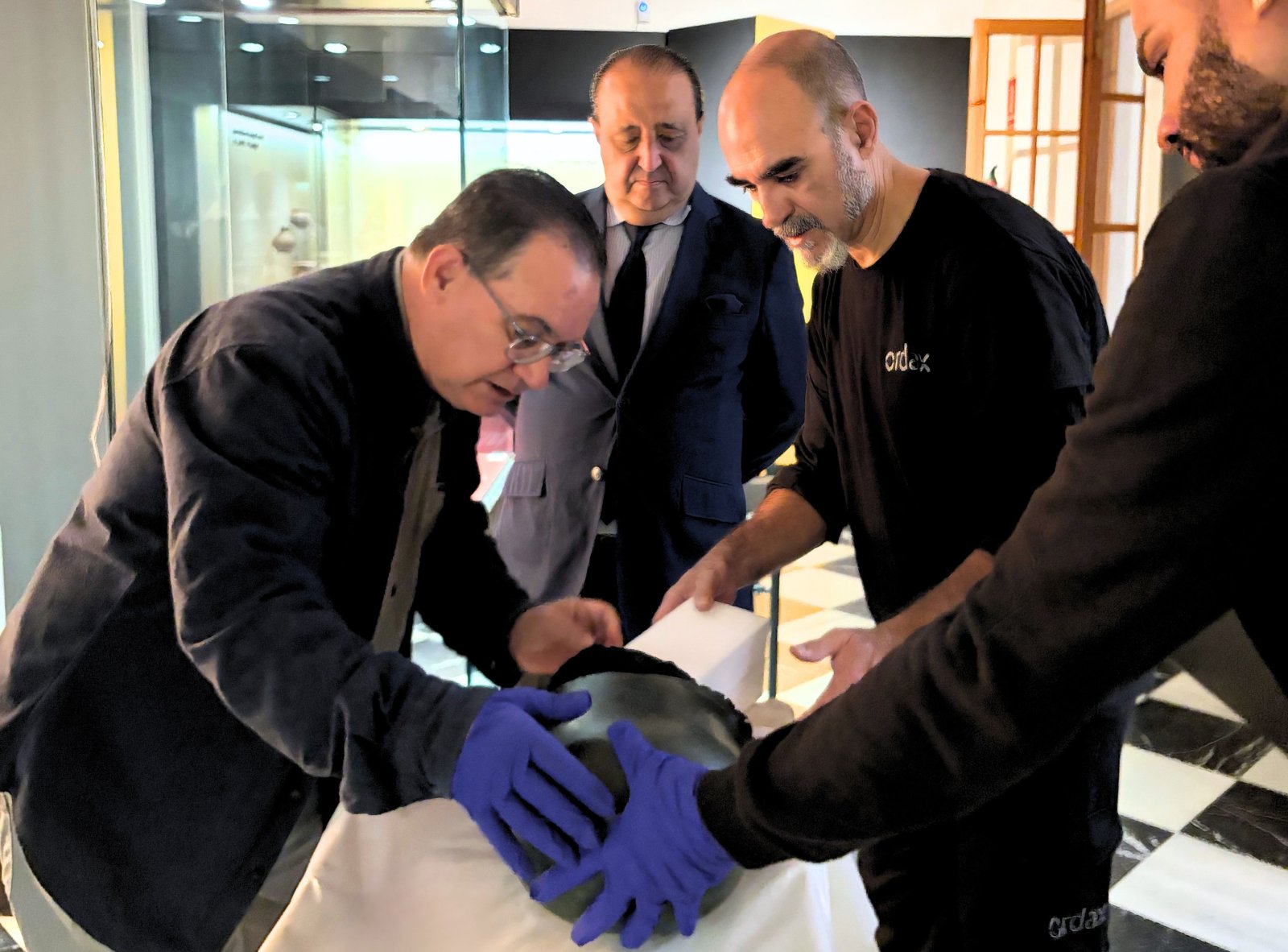
Two pieces from the Museo Arqueológico Municipal de Jerez leave the city to be exhibited in Mérida. They are the Casco Griego del río Guadalete and the sculpture of Juno Pronuba, which will form part of the temporary exhibition «A la sombra de Vulcano. Bronce romano en Hispania», organised by the Museo Nacional de Arte Romano de Mérida (MNAR) on the occasion of its 40th anniversary after the expansion. The exhibition can be visited from November 20 to March 31, 2027.
The Casco Griego is dated to the beginning of the 7th century BC and is made of bronze. It is one of the most emblematic pieces of the Jerez museum and the oldest Greek helmet preserved in the western Mediterranean. It lost its nose guard and was intentionally perforated, which has led to it being interpreted as part of a possible ritual offering to the waters of the river. Due to its fragility, neither the crest that crowned it nor its inner leather lining have been preserved.
Its departure from Jerez is exceptional: it has only travelled to Madrid twice, in 1984 for its restoration and in 2017 for the 150th anniversary exhibition of the Museo Arqueológico Nacional.
The statuette of Juno Pronuba, from the 1st century AD, comes from Mesas de Asta and is part of the museum's bronze collection. It has undergone restorations in 1949 and between 1983 and 1984.
The exhibition aims to update the knowledge of the exhibition «Los Bronces Romanos en España», held in 1990, and to bring to the public the relevance of bronze in Roman society. The materials range from the pre-Roman period to late antiquity.
The delegate of Culture, Grandes Eventos, Patrimonio Histórico y Jerez Ciudad Cultura, Francisco Zurita, has been present during the packing and preparation of both works, a process that, according to the Ayuntamiento, guarantees the safety conditions for their transfer and exhibition. Zurita has stated that this participation is «an extraordinary opportunity for the dissemination of the historical heritage of Jerez» and has stressed the importance of collaboration between museum institutions.
Shall we let you know what matters?