Un catalizador con sello de la UCA logra el 96% de precisión química
Topics Universidad de Cádiz
Two researchers from the University of Cádiz take part in a study published in Nature on a catalyst that improves industrial reactions.
CádizYa newsroom ·
An international team of scientists has developed a catalyst that allows a chemical reaction used in industry, hydroformylation, to be directed with greater precision; it is used to obtain raw materials for making detergents and other products. In one of the experiments, the material transformed 99.8% of the raw material and reached a selectivity close to 96% toward the target compound, according to the University of Cádiz.
The catalyst is a material that facilitates and directs a chemical reaction. In this case it is rhodium, a metal, hosted inside a zeolite, a porous structure. The team has discovered how to control its behavior to favor the formation of the desired product and limit unwanted reactions. The authors place the result among the highest described so far for this type of reaction.
Microscopes to see atoms
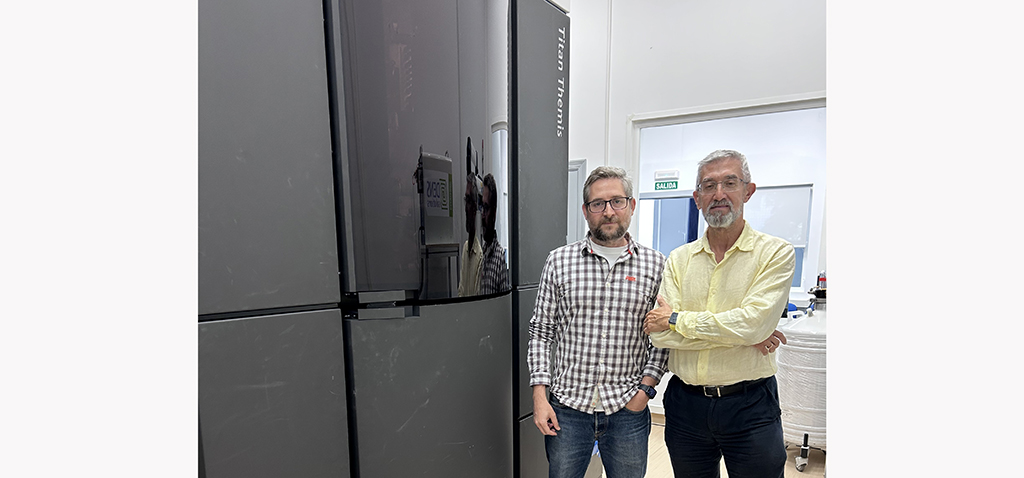
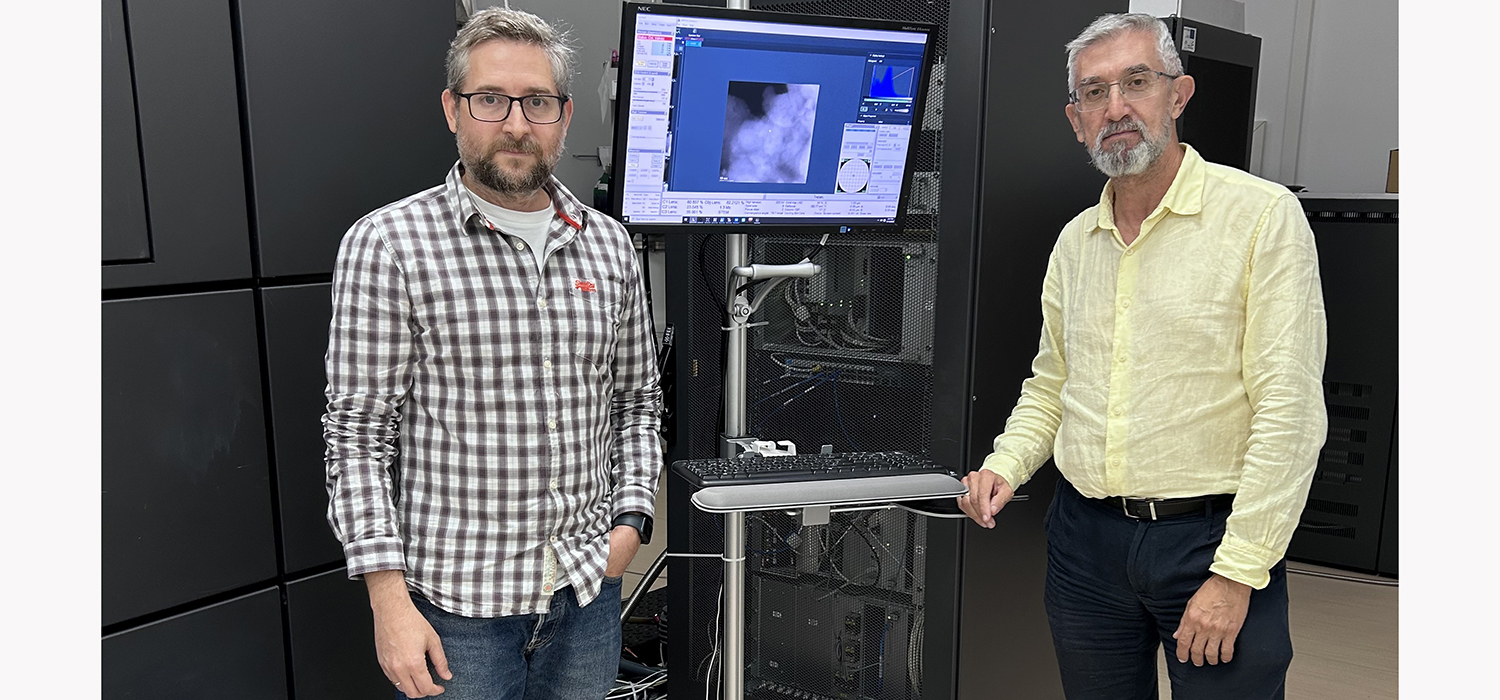
Miguel López-Haro and José Juan Calvino, researchers from the Department of Materials Science and Metallurgical Engineering and Inorganic Chemistry and from the Institute of Electron Microscopy and Materials Research (IMEYMAT) of the University of Cádiz, took part in the work. Their contribution consisted of studying the structure of the catalyst at the atomic scale with high-resolution electron microscopy techniques, which made it possible to observe how the rhodium atoms that make the reaction possible are distributed and transformed.
These analyses were carried out with the latest-generation electron microscopes of the DME-UCA, integrated into the Singular Scientific and Technical Infrastructure for Electron Microscopy of Materials (ICTS ELECMI), at the Faculty of Sciences.
The study has also confirmed that the catalyst can be reused in several experimental cycles, a relevant characteristic for moving toward more efficient chemical processes.
The research was carried out by specialists from the Institute of Chemical Technology (ITQ), a joint center of the Spanish National Research Council (CSIC) and the Polytechnic University of Valencia, the ALBA synchrotron and the University of Cádiz. Its results open ways to design more precise catalysts and explore alternatives to the systems used today by the chemical industry.
The work has been published in the journal Nature with the reference Zhao, M. et al. (2026): «Rh3+ stabilized in KRh@MFI catalyses regioselective hydroformylation».
Shall we let you know what matters?