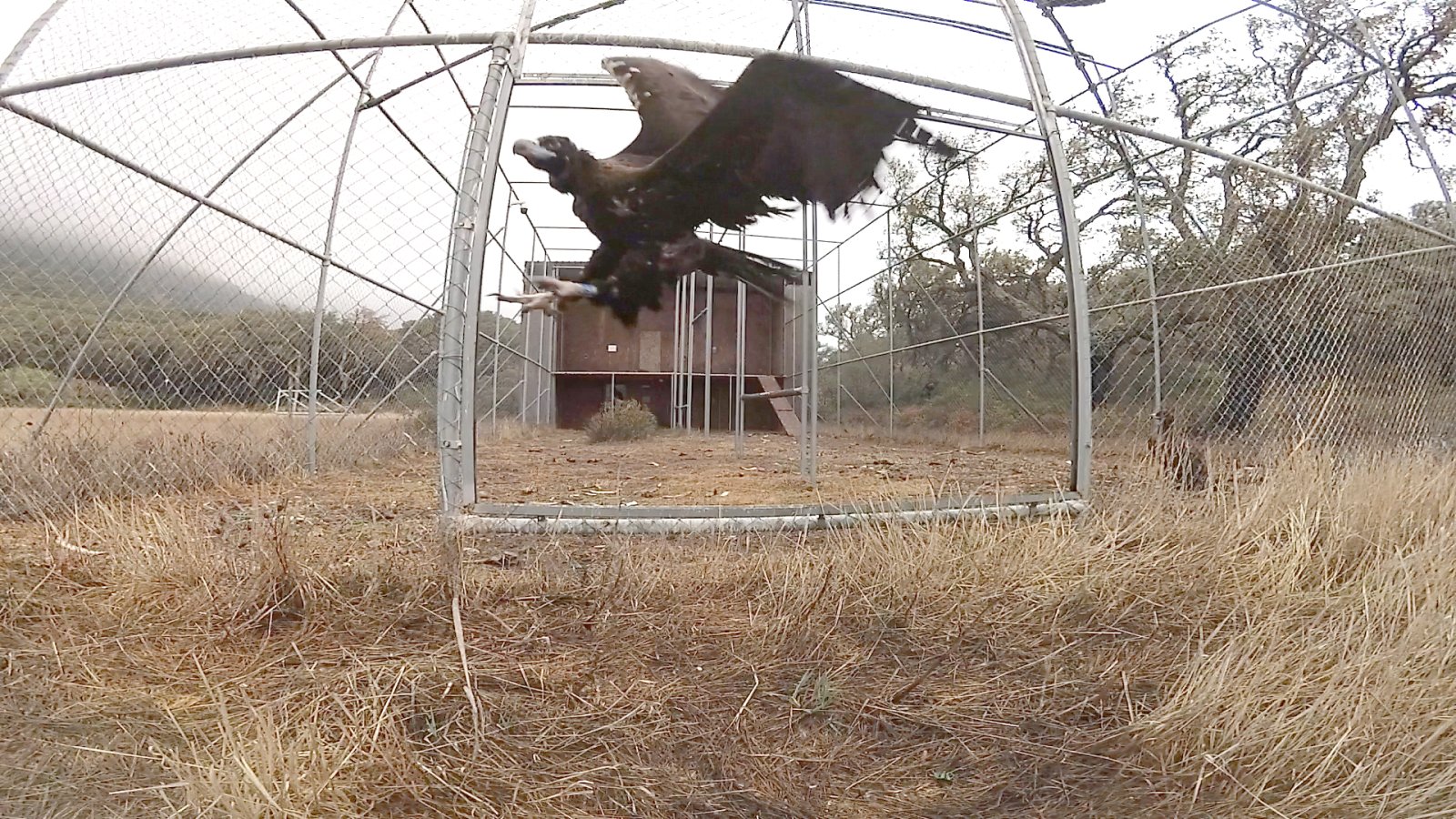
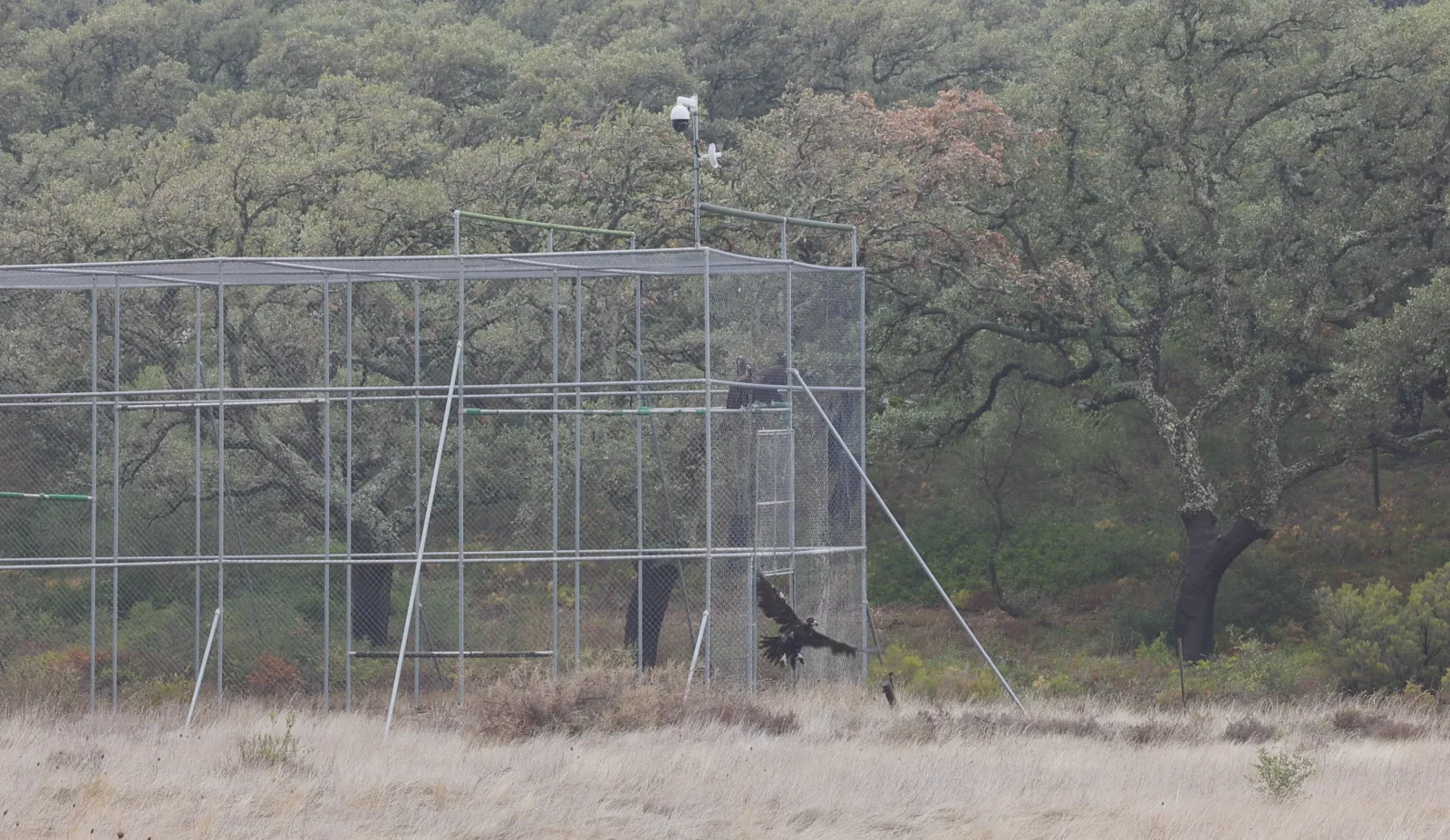
Seven black vultures fly again in Cádiz after a century
Topics Regional Government of Andalusia Parque natural de Los Alcornocales
The Sociedad Gaditana de Historia Natural has released the first seven specimens in Los Alcornocales as part of a reintroduction programme.
CádizYa newsroom ·
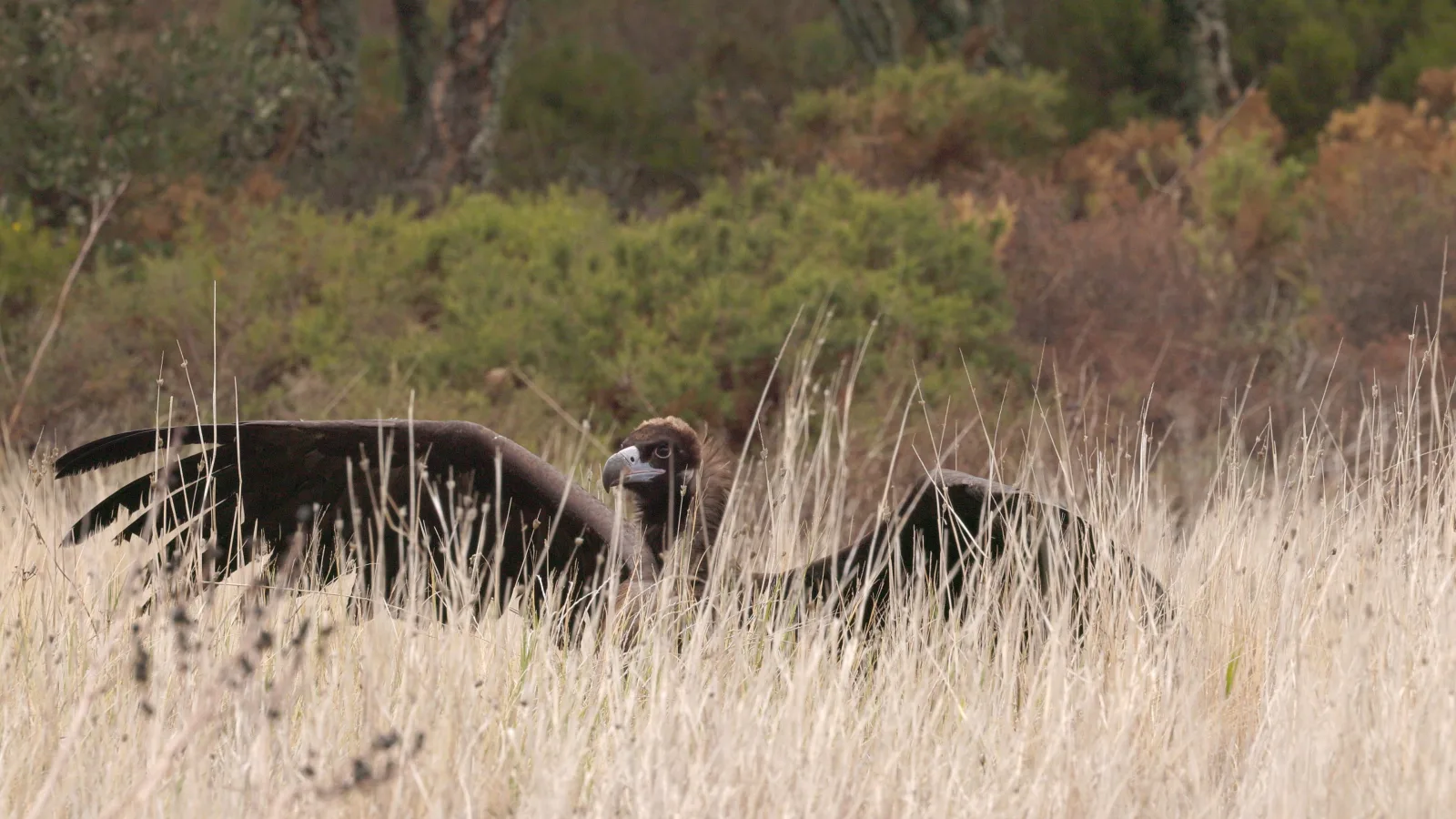
Seven black vultures have returned this Thursday to the skies of the province of Cádiz, where the species had disappeared as a breeding species more than a century ago. The release took place in Los Alcornocales Natural Park, according to the Sociedad Gaditana de Historia Natural (SGHN).
The black vulture (Aegypius monachus) is Europe's largest scavenging bird. Its disappearance in the area was due to direct persecution, the use of poisons and the transformation of its habitat, as detailed by the SGHN.
The initiative is promoted by the SGHN and has the backing of the Fundación Unicaja, within its environment call, and the collaboration of the Consejería de Sostenibilidad y Medio Ambiente of the Junta de Andalucía and the Centro de Conservación de la Biodiversidad Zoobotánico de Jerez.
The seven specimens come from the Red de Centros de Recuperación de Especies Amenazadas (CREAs) of the Junta de Andalucía. After receiving veterinary care, they spent several months in an acclimatization aviary located in the hills of Alcalá de los Gazules, where a team of SGHN volunteers has taken care of their feeding and daily care. The food has been provided by Alcampo Jerez.
This technique, known as soft release, aims for the young birds to become familiar with the territory so that they return to breed when they reach sexual maturity, between four and five years of age, since the black vulture tends to return to the area where it was raised.
To facilitate their settlement, artificial nests have been installed in trees near the aviary and the facilities are close to a scavenger feeding station where food is provided periodically. The park also has extensive forests and large trees for nesting, and already hosts populations of griffon vulture and Egyptian vulture.
The seven specimens carry GPS tracking devices that will allow their movements to be known. This technology also serves as a tool against the illegal use of poisoned baits, by being able to detect anomalies in the birds' movements that alert to risk situations.
This first release closes the first year of the programme's actions. The SGHN expects to maintain the project for at least four more years, with new releases of young specimens from Andalusian recovery centres.
The recovery of the species will not be immediate: it is a long-term process that, according to the SGHN, will culminate when the first released specimens return to Los Alcornocales and begin to breed, giving rise to a new stable population in the mountains of Cádiz.
Shall we let you know what matters?